
অনুভূতি যেখানে প্রকাশ পায়
অনুভূতি যেখানে প্রকাশ পায়
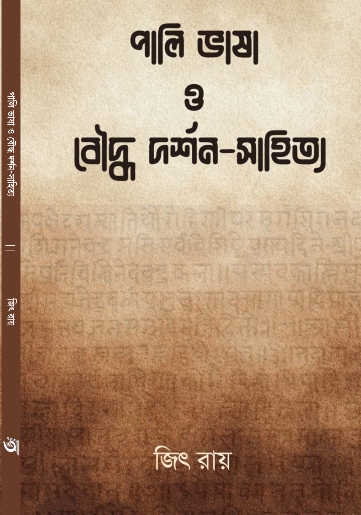
When I chose Pali language and literature as a general paper during my postgraduate (Bengali) studies at the University of Calcutta, many people found the subject difficult and boring. But with the sincere help and proximity of our professors Sri Sumanpal Bhikkhu, Professor (Dr.) Jayanti Chatterjee, Professor (Dr.) Saswati Mutsuddi, Pali language became easy and understandable to me. It was under their inspiration that this language became as dear and dear as Bengali. Within a few years of passing my M.A., I thought that something needed to be done to remove the unnecessary fear and complexities that students have about Pali language. It is for that purpose that I have written this book, so that they can be confident in their curriculum-based preparation and are encouraged to achieve better results.\\r\\n\\r\\nAs I I have gradually assimilated myself with the Pali language during my studies, and I have outlined the outline of that experience and preparation in detail in my book “Pali Language and Buddhist Philosophy-Literature”. Here, the global spread of Buddhism, the history of Pali language and Buddhist scripture practice in India and Bengal, the contributions of related educational institutions and eminent scholars have been discussed. Along with this, I have also systematically presented the origin of the Pali language, linguistic features and the method of translating Pali into Bengali.\\r\\nThe Pali language is an invaluable heritage of human civilization, which is established as the main source of ancient Indian knowledge, philosophy and Buddhism. Although this language is gradually disappearing at present, its grammar, literature and Tripitaka-rich knowledge base are still equally important and relevant. Through this effort, a small initiative has been taken to preserve the heritage of the Pali language in memory and contemplation.